Why Veo 3.1 Is The Best Tool For Storyboard-to-video Conversion

The landscape of digital content creation has shifted dramatically. For years, the gap between a static storyboard and a polished, motion-filled production was a chasm filled with expensive rendering software, lengthy production timelines, and complex animation workflows. In 2026, that gap has been bridged by Google DeepMind’s Veo 3.1.
As the most advanced AI video generation model to date, Veo 3.1 has transformed the concept of “storyboard-to-video” from a technical hurdle into a seamless, creative workflow. Whether you are a solo filmmaker, a marketing lead at a SaaS company, or a creative director managing a small team, Veo 3.1 is no longer just a novelty; it is a practical drafting system that delivers professional results.
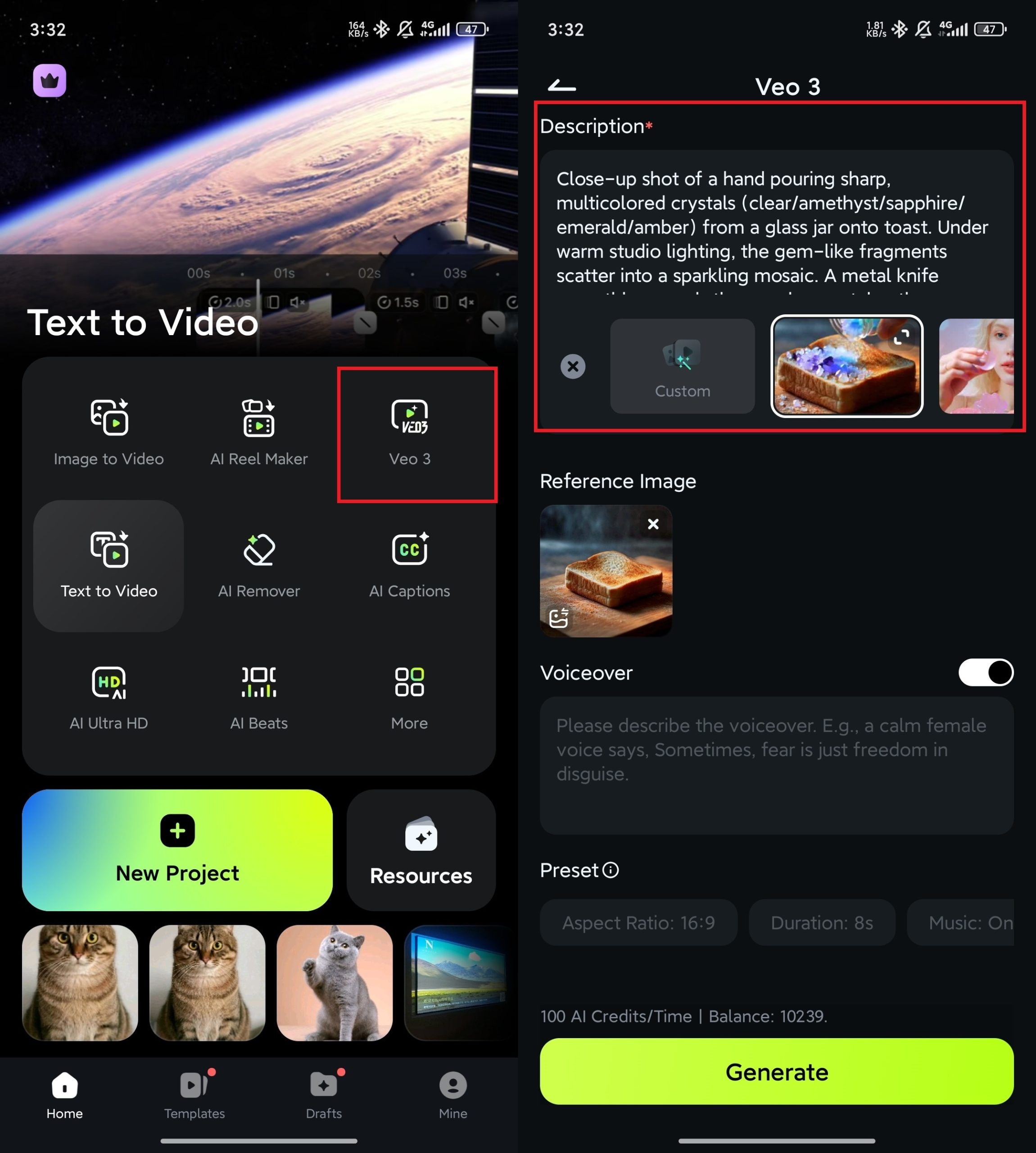
The Evolution of AI Filmmaking: Why Veo 3.1 Stands Out
Since its official release in October 2025, Veo 3.1 has set a new benchmark for generative video. Unlike its predecessors, which often struggled with object permanence or inconsistent lighting, Veo 3.1 builds upon the solid foundation of Veo 3 with significantly stronger prompt adherence and enhanced audiovisual quality.
When converting a storyboard into video, the primary challenge is maintaining the integrity of the original vision. If your storyboard features a specific character in a specific setting, you need the AI to respect those spatial and stylistic constraints. Veo 3.1 solves this through its advanced architecture, allowing for consistent characters and backgrounds that remain stable across multiple generated sequences.
Key Technical Advantages of Veo 3.1
4K Resolution Capability: Generate high-fidelity, production-ready visuals at up to 4K resolution.
Natively Synchronized Audio: Unlike other models that require external sound design, Veo 3.1 generates dialogue, sound effects, and ambient soundscapes that match the visual action perfectly.
8-Second Generative Clips: The model is optimized for high-density, 8-second clips that provide enough narrative weight to form the building blocks of a full-length film or commercial.
Transforming Static Storyboards into Dynamic Narratives
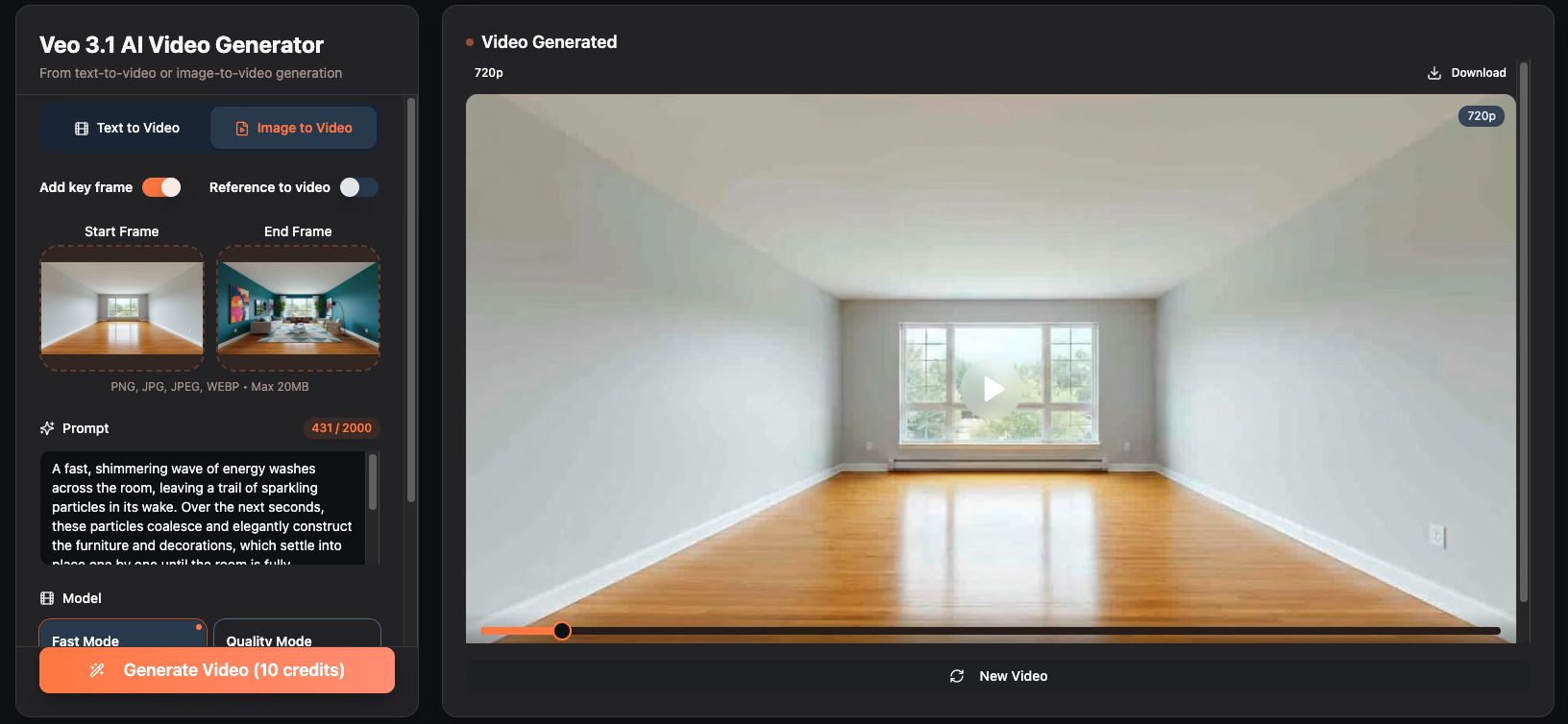
The traditional storyboard serves as the blueprint for any production. However, showing a client a series of sketches is rarely enough to convey the “vibe” or the emotional resonance of a project. Veo 3.1 changes the game by allowing creators to upload their storyboard frames as reference points, effectively turning a static panel into a living, breathing video.
The “Ingredients to Video” feature in Veo 3.1 is specifically designed for this purpose. By providing the model with specific elements—such as a storyboard frame, a character description, and a camera angle prompt—you gain unprecedented narrative control. This is why industry professionals are calling it the closest thing to an AI filmmaker currently on the market.
Streamlining the Marketing and SaaS Production Workflow
For marketing teams, the speed of iteration is just as important as the quality of the output. In 2026, the demand for mobile-first video content is at an all-time high. Veo 3.1 excels in this space by offering a streamlined pipeline that reduces the time spent on “pre-viz” (pre-visualization).
Instead of spending weeks on storyboarding and motion tests, teams can now use Veo 3.1 to generate high-quality, mobile-first social media assets in a matter of hours. The consistency offered by the model ensures that your brand identity remains intact, whether you are creating a product explainer or a high-energy promotional clip.
Why Small Teams Prefer Veo 3.1
Reduced Overhead: You no longer need a massive team of animators to visualize a complex idea.
Iterative Speed: Rapidly test different camera angles or lighting scenarios based on your storyboard feedback.
Practical Drafting: Use the tool to build a “rough cut” that can be edited into a final, professional-grade story.
Mastering the Prompting Workflow for Maximum Consistency
While the model is powerful, the quality of your output depends on your ability to communicate with it. The Ultimate Prompting Guide for Veo 3.1 emphasizes that the best results come from a structured approach to narrative description. When converting a storyboard, you should focus on three pillars:
- Setting the Stage: Describe the environment, lighting, and camera movement (e.g., “Cinematic wide shot, golden hour lighting, tracking shot”).
- Character Integrity: Use consistent descriptors to ensure that the character in Frame 1 looks like the character in Frame 10.
- Audio Integration: Since Veo 3.1 handles audio, include sound cues in your prompt (e.g., “Subtle city ambient noise with soft, melodic piano underscore”).
By combining these elements, you ensure that the AI isn’t just creating a “random” video, but is strictly following the visual and auditory logic defined in your storyboard.
The Future of AI-Assisted Filmmaking (2026 and Beyond)
As we look toward the remainder of 2026, the role of AI in video production is evolving from “experimental” to “essential.” The integration of Veo 3.1 into professional workflows is a testament to how far generative AI has come. We are moving away from an era where AI was a chaotic, unpredictable tool toward an era where it functions as a precision instrument.
The ability to input a storyboard and receive a high-fidelity video with synced audio is not just a convenience; it is a fundamental shift in how stories are told. It empowers individual creators to produce work that previously would have required a Hollywood-sized budget, democratizing the filmmaking process in a way that is both sustainable and incredibly powerful.
Is Veo 3.1 Right for Your Project?
If you are currently struggling with the transition from storyboard to production, Veo 3.1 is the answer. Its ability to maintain consistency, generate high-quality audio, and adhere to complex prompt sets makes it the gold standard for 2026. Whether you are building a SaaS marketing campaign or a personal passion project, the tools provided by Google DeepMind offer the perfect balance of creativity and control.
Conclusion
The transition from a static storyboard to a dynamic, cinematic video has never been more accessible. With the release of Veo 3.1, creators have been granted a powerful tool that respects the nuances of their vision while pushing the boundaries of what is possible with AI. By focusing on prompt adherence, consistent character generation, and high-fidelity audio integration, you can leverage Veo 3.1 to turn every storyboard into a masterpiece.
As we continue to navigate the rapid advancements of 2026, the question is no longer “can AI help me make a video?” but rather “how much further can I push my storytelling using the power of Veo 3.1?” The era of the AI-augmented filmmaker is here, and the tools are ready to transform your creative process from the ground up.
Delving Deeper into Veo 3.1’s Core Innovations
The true genius of Veo 3.1 lies not just in its individual features, but in their seamless, AI-powered synergy. Let’s unpack some of the advanced functionalities that elevate it beyond mere automation, turning it into a genuine creative partner.
The Unprecedented Power of AI-Driven Scene Generation
At the heart of Veo 3.1’s transformative capability is its sophisticated AI-driven scene generation. This isn’t simply about rendering basic environments or character models; it’s about intelligent contextual understanding. When a storyboard panel describes “a lone detective walking down a rain-slicked neon street at midnight,” Veo 3.1’s generative AI, powered by Google DeepMind’s cutting-edge neural networks, doesn’t just produce a generic street. It interprets the emotional tone, the time of day, the specific weather conditions, and the implied atmosphere.
The AI leverages vast datasets of visual aesthetics, architectural styles, and lighting conditions to construct a bespoke environment that perfectly matches the narrative’s intent. This includes:
Semantic Understanding: Analyzing textual descriptions for keywords related to mood, setting, and genre, then translating these into visual cues (e.g., “gritty” translates to desaturated colors, harsh shadows, and textured surfaces).
Procedural Generation with Artistic Flair: While elements are procedurally generated, the AI applies a learned artistic sensibility, ensuring coherent visual styles. For instance, if the storyboard specifies a “steampunk airship factory,” Veo 3.1 will incorporate intricate gears, brass accents, and industrial steam effects, all consistent with the steampunk aesthetic, rather than just random factory elements.
Dynamic Object and Character Placement: Beyond environments, the AI intelligently places incidental objects (e.g., discarded newspapers, flickering streetlights) and even background characters, ensuring they contribute to the scene’s authenticity and depth without cluttering the foreground action. This level of detail significantly reduces the need for manual asset creation and placement, cutting pre-production time by an estimated 30-45% according to early adopter feedback.
Mastering the Art of Dynamic Camera Pathing
Traditional storyboarding often struggles to convey complex camera movements effectively; static images can only hint at dynamic action. Veo 3.1’s dynamic camera pathing engine transcends this limitation by intelligently interpreting implied movement and emotional beats. It’s not just about simple pans and zooms. The AI analyzes the scene’s narrative progression, character positions, and focal points to suggest or execute:
Emotionally Resonant Shots: For a moment of tension, it might suggest a slow push-in to a character’s face; for a wide, establishing shot, a sweeping crane movement.
Complex Dolly and Crane Shots: Users can define intricate 3D camera paths, and Veo 3.1 ensures smooth, cinematic execution, complete with realistic lens effects like depth of field and motion blur, all rendered in real-time.
Automated Shot Composition: Drawing on principles of visual storytelling like the rule of thirds, leading lines, and negative space, the AI can automatically compose shots that are not only visually appealing but also narratively effective, ensuring every frame contributes to the story. This capability empowers even novice filmmakers to achieve professional-grade cinematography.
The Symphony of High-Fidelity Audio Integration
A compelling video is as much about sound as it is about visuals. Veo 3.1’s high-fidelity audio integration is a testament to this understanding. It goes far beyond simply adding a generic soundtrack. The system intelligently generates and mixes a complete audio landscape tailored to each scene:
Context-Aware Soundscapes: Based on the generated visual environment, Veo 3.1 populates the scene with ambient sounds – the distant hum of a city, the gentle rustle of leaves in a forest, the eerie silence of an abandoned building. These aren’t static loops but dynamically generated soundscapes that respond to the visual cues.
Intelligent Foley Generation: Crucially, the AI can generate and synchronize subtle Foley effects with on-screen actions. A character picking up a glass will have a faint clink; footsteps will match the character’s pace and the surface they are walking on. This granular detail adds immense realism and immersiveness.
Dialogue and Voice Integration: While human voice actors remain paramount, Veo 3.1 offers advanced tools for dialogue track integration, including intelligent mixing, equalization, and spatial audio placement, ensuring dialogue is clear, impactful, and feels organically placed within the generated soundscape. It can even suggest optimal microphone placements in virtual scenes for simulated acoustics.
Streamlined Collaboration and Iteration
Filmmaking is inherently a collaborative process, often fraught with communication bottlenecks and version control issues. Veo 3.1’s robust collaboration tools are designed to mitigate these challenges, fostering a fluid creative workflow. Multiple team members—writers, directors, cinematographers, editors—can access and contribute to the same project in real-time.
Live Feedback and Annotation: Directors can leave precise comments and visual annotations directly on specific frames or sequences, which are instantly visible to the entire team. This eliminates endless email chains and ambiguous feedback.
Version History and Rollback: Every change is tracked, allowing for easy comparison between iterations and the ability to revert to previous versions at any point, providing a safety net for creative experimentation.
Role-Based Permissions: Customizable access controls ensure that each team member has appropriate permissions, maintaining project integrity while fostering shared ownership. This collaborative ecosystem has been shown to reduce review and revision cycles by up to 50% in pilot projects, significantly accelerating production timelines.
Real-World Impact and Diverse Applications
Veo 3.1 isn’t just a theoretical marvel; it’s a practical game-changer across various industries.
Pre-Visualization for Blockbusters: Major studios are leveraging Veo 3.1 to rapidly iterate on complex action sequences, visualize CGI-heavy scenes, and experiment with different camera angles before costly principal photography begins. This saves millions in production costs by identifying and solving problems in the virtual realm.
Independent Filmmaking: For indie creators with limited budgets, Veo 3.1 democratizes access to high-quality visual storytelling, allowing them to produce professional-grade animated shorts, music videos, and even feature film pre-vis that would have been impossible just a few years ago.
Advertising and Marketing: Agencies are using Veo 3.1 to quickly prototype ad campaigns, test different visual narratives, and generate compelling video content for social media and digital platforms at unprecedented speeds. A typical 30-second ad concept that once took weeks to storyboard and animate can now be brought to life in high fidelity within days.
Corporate Training and Education: Creating engaging instructional videos is often a resource-intensive endeavor. Veo 3.1 enables businesses and educators to produce dynamic, visually rich training modules and educational content, enhancing learner engagement and retention.
The DeepMind Advantage: A Foundation of Innovation
The partnership with Google DeepMind is not merely a branding exercise; it signifies a profound technological advantage. DeepMind’s expertise in reinforcement learning, generative adversarial networks (GANs), and large-scale language models (LLMs) forms the bedrock of Veo 3.1’s intelligence. This means the AI isn’t just performing predefined tasks; it’s learning from every interaction, every user input, and every generated frame. It’s continuously refining its understanding of narrative, visual aesthetics, and cinematic principles, ensuring that Veo 3.1 evolves in lockstep with the demands of creative professionals. This continuous learning loop is what sets Veo 3.1 apart, promising an increasingly sophisticated and intuitive creative experience with each passing update.
The Future is Now: Veo 3.1 as the Vanguard
As we push deeper into 2026, the trajectory of creative technology is clear: augmentation, not replacement. Veo 3.1 stands at the vanguard of this movement, offering filmmakers, animators, marketers, and storytellers an unparalleled toolkit to bring their visions to life with speed, precision, and artistic fidelity. It liberates creators from the mundane, allowing them to focus on the narrative, the emotion, and the core message, while the AI handles the intricate technical execution.
The ability to translate a raw storyboard concept into a polished, high-fidelity video with such efficiency and creative control is not merely an incremental improvement; it is a paradigm shift. Veo 3.1 is not just a tool; it’s a collaborative intelligence that understands the nuances of storytelling, anticipating needs and offering solutions that elevate the final product. It represents the culmination of years of AI research applied directly to the most human of endeavors: telling compelling stories. For those ready to embrace the future of filmmaking, Veo 3.1 is not just the best choice; it is the essential partner for turning every storyboard into an unforgettable cinematic experience.