
The landscape of AI video production has shifted dramatically in 2026. With the release of Veo 3, creators have unprecedented power to manifest cinematic visuals from simple text prompts. However, even the most advanced models occasionally produce “weak” generations—flickering artifacts, inconsistent character anatomy, or lackluster motion.
Improving your output isn’t just about luck; it is a structured iterative process. Whether you are looking for high-resolution minimalist aesthetics or complex, vibrant space-themed compositions, mastering the feedback loop is the key to professional-grade results.

The Core Philosophy of Iterative Prompt Engineering
When a Veo 3 generation fails to meet your expectations, the instinct is often to discard the prompt entirely. This is a mistake. Instead, treat your initial prompt as a draft.
By breaking down the generation into smaller, manageable components, you can isolate where the model is struggling. If the lighting is perfect but the motion is erratic, you don’t need a rewrite—you need a motion constraint adjustment.
1. Leverage Negative Prompting for Artifact Reduction
One of the most effective ways to sharpen weak generations is by utilizing negative prompts. In 2026, Veo 3 responds significantly better to explicit exclusions. If your video suffers from “morphing” or “unnatural textures,” explicitly instruct the model to avoid these.
- Specify constraints: Use tags like “no morphing,” “stable anatomy,” and “consistent lighting.”
- Layering: Add weight to these negative constraints to ensure they take precedence over stylistic flares.
Visual Consistency and Resolution Upgrading
Achieving 8K clarity requires more than just high-quality base generation. Often, the “weakness” in a generation is simply a lack of textural depth. When working with complex themes like ocean vistas or space illustrations, your prompts must be descriptive enough to guide the AI’s rendering engine toward higher pixel density.
2. Using Reference Frames for Structural Stability
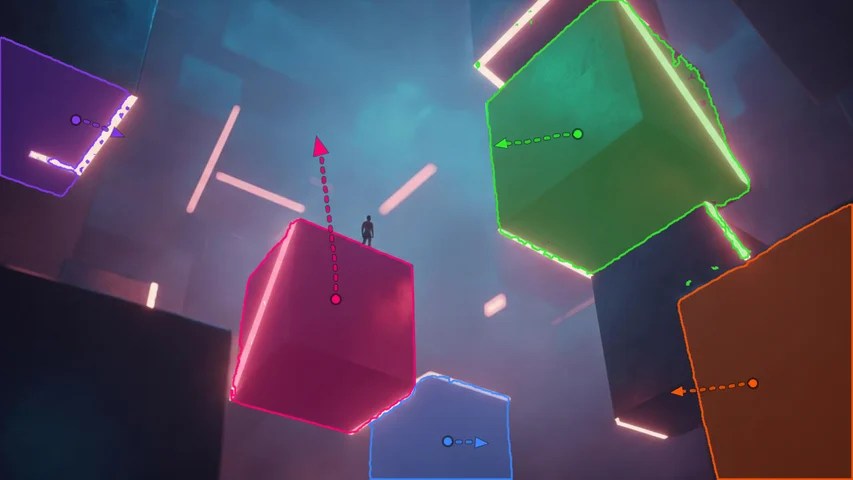
Veo 3 allows for the integration of reference images. If you are struggling to get a specific visual style—such as a classic minimal ocean design or a vibrant space composition—upload a high-resolution reference frame.
By providing a visual anchor, you significantly reduce the “creative drift” that often plagues AI video generation. This technique ensures that even if the motion is complex, the underlying aesthetic remains consistent with your vision.
Advanced Techniques for Motion Control
Weak generations often stem from “motion blur” or “temporal instability.” To fix this, you must control the frame-to-frame coherence.
3. Segmented Prompting (The “Chunking” Method)
Instead of asking for a 10-second sequence in one go, generate in shorter, 2-second segments. This allows you to guide the AI through the specific motion arc you desire. Once you have a sequence of high-quality clips, you can stitch them together using modern AI-powered frame interpolation tools.
- Step 1: Define the start frame.
- Step 2: Generate the transition.
- Step 3: Use a “consistency pass” to ensure lighting remains uniform across the sequence.

Troubleshooting Common Veo 3 Pitfalls
Even with the best tools, you will hit walls. Here is how to diagnose and solve the most common issues in 2026:
- The “Uncanny Valley” Face: If a character’s face is inconsistent, use a Seed Lock. By locking the seed after a semi-successful generation, you can iterate on camera movement or background elements without altering the subject’s facial structure.
Color Bleeding: If your vibrant space illustrations are bleeding colors, lower the “Creativity/Chaos” setting by 10-15%. Sometimes, the model is being too* creative, which leads to visual noise.
- Lack of Detail: If your output looks “blurry,” ensure your prompt includes technical keywords like “shot on 35mm lens,” “depth of field,” or “8K resolution.” These terms act as triggers for the model to allocate more computational resources to texture rendering.
Why Iteration is Your Best Asset
The beauty of the Veo 3 ecosystem is its accessibility. With costs as low as $0.06 per second, you have the financial freedom to generate dozens of iterations for a single project. Do not aim for perfection on the first try. Aim for incremental improvements.
Every time you adjust a prompt, you are teaching the model your specific creative language. Over time, you will find that your “weak” generations become fewer and further between, replaced by high-fidelity, professional-grade AI cinematography.
Final Pro-Tip for 2026
Always review your generations in slow motion. Often, what looks like a failed generation is actually a brilliant piece of abstract art that just needs a different context. If the motion is too fast, add “cinematic slow motion” to your prompt to force the model to calculate more frames per second of action.
By applying these iterative strategies, you are not just using Veo 3—you are directing it. Stay patient, keep your prompts structured, and watch your AI-generated projects reach new levels of visual perfection.